
Amazon Main Image vs A+ Content Images (2026)
The main image wins the click and must follow strict marketplace rules; A+ Content explains the product after the click. This comparison shows what each image role must prove, where teams mix them up, and how to brief both from one product reference.
AISellerKit Editorial Team · Reviewed by Commerce Strategy Team · Updated Jul 3, 2026
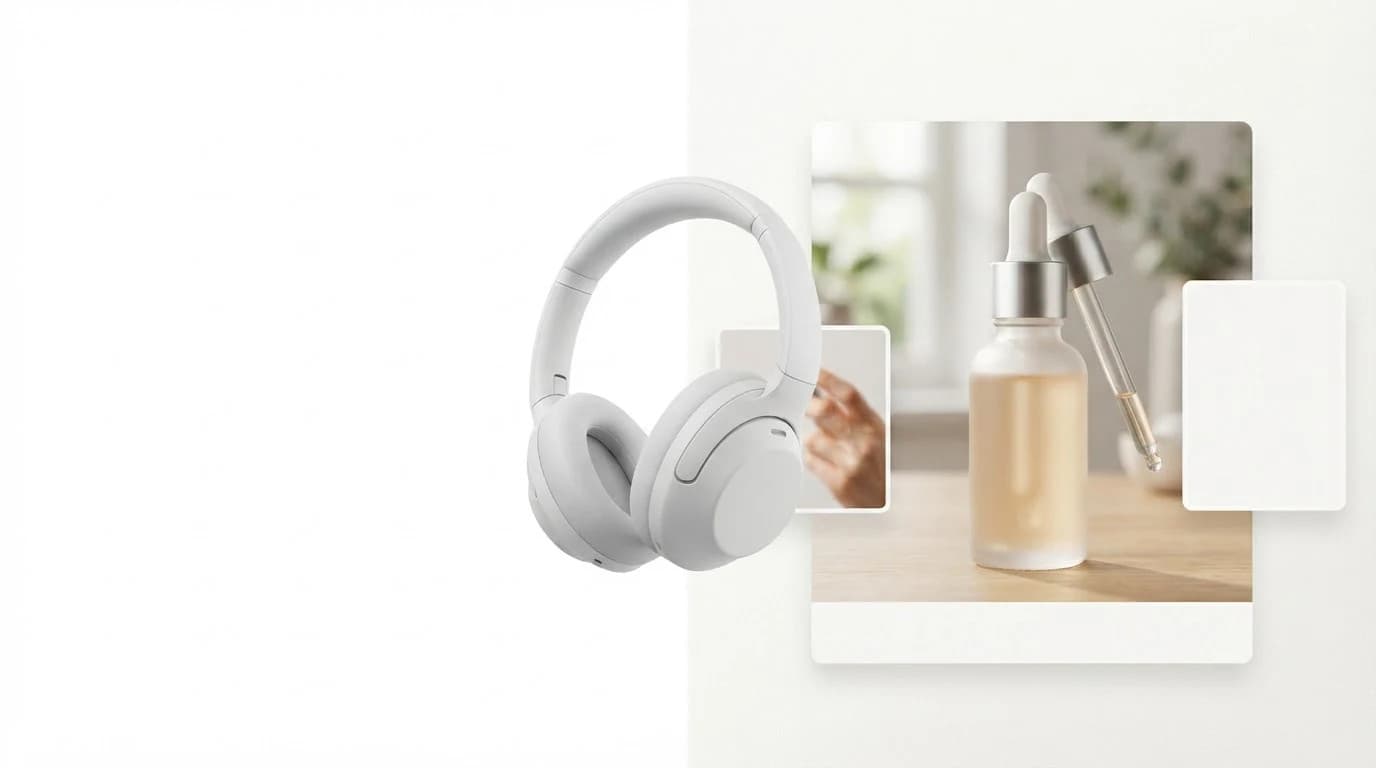
Production and review workflow
Two jobs, one listing
The main image is a search-result thumbnail: its job is recognition, accuracy and compliance. A+ Content is a below-the-fold storytelling surface: its job is to explain benefits, use cases, materials and comparison without carrying the full burden of the sale. Treating the main image like a poster or the A+ modules like a second main image is the most common planning error. Decide the role first, then choose the crop, text policy and evidence for that role.
Main image rules and evidence
Amazon's main image has category-specific requirements, but the stable principles are a product-first composition, a clean background, accurate shape and no distracting overlays. The product must match the variation and pack contents exactly. Show scale through the product itself or a supporting image, not by exaggerating the main frame. When the category allows a prop or model, confirm the current rule before production. The main image should survive a small thumbnail and still show what the product is.
A+ content storytelling and proof
A+ modules can carry comparison charts, material close-ups, use-case scenes, dimension diagrams and brand story. The strongest modules answer one buyer question each: does it fit, what is included, how is it made, how does it compare, and what does it look like in use. Keep text short enough to read on mobile, and make every claim consistent with the main image and the product detail page. A+ content is not a place to invent a new product story the listing cannot support.
Workflow: brief both roles from one source
Start with the SKU facts: dimensions, materials, included pieces, claims and target marketplace. Generate or shoot the main image against the strictest rule set, then use the approved product views as references for A+ modules. Keep a shared asset library so a change in pack contents or dimensions updates both surfaces. Review the main image for compliance and the A+ modules for comprehension separately; a single approval pass tends to miss one of the two jobs.
When to choose which
If the product is new, the main image and the first three A+ modules should be produced together; the listing needs both to convert. If an existing listing has a strong main image but weak conversion, invest in A+ modules that answer fit, contents and comparison questions. If the main image is rejected or underperforms in search, fix compliance and recognition before adding more A+ content. Neither surface can compensate for a product that is misrepresented in the other.
FAQ
Can A+ content replace the main image?
No. The main image is the search-result and listing lead image with its own compliance rules; A+ content explains the product below the fold and cannot substitute for a compliant main image.
Should the main image and A+ images use the same product view?
They can share approved product references, but they should not repeat the same frame. The main image needs recognition; A+ modules need to answer different buyer questions.
What should an A+ module show first?
Lead with the question that blocks the purchase: fit, contents, material, compatibility or comparison. Then add supporting proof rather than another lifestyle scene.
How do I keep both surfaces consistent?
Fix the SKU facts once, store approved views in a shared library, and review the main image for compliance and the A+ modules for comprehension in separate passes.
Can AI generate both image roles?
It can generate supporting scenes and module visuals, but product accuracy, pack contents, dimensions and marketplace claims must be verified against the SKU before publishing.
Official sources
- Amazon Seller Central — product image requirementsChecked 2026-11-13
- Amazon — A+ Content design guideChecked 2026-11-13
- Google Search Central — image best practicesChecked 2026-11-13
Checked before publishing. Confirm the current requirements on the destination platform before a batch upload.
Related resources
Amazon Main Image vs Lifestyle Image (2026)
Compare the Amazon main image and lifestyle images: compliance, buyer questions, thumbnail recognition and a workflow that keeps both accurate.
Walmart Main Image vs Amazon Main Image (2026)
Compare Walmart and Amazon main image rule sets, review workflows and the production habits that keep one master image compliant on both.
Shopify Product Images vs Etsy Listing Images (2026)
Compare Shopify storefront images and Etsy listing images: shopper intent, crops, storytelling and the review each channel needs.
eBay Photo vs Amazon Listing Photo (2026)
Compare eBay item photos and Amazon listing photos: condition evidence, trust, compliance rules and the workflow for sellers who list on both.
Resource center
A central entry point for guides, examples, templates, industry pages, and channel hubs.
E-commerce video
Alongside product-image workflows, AISellerKit supports e-commerce video generation from a product start image and a short creative direction. It helps teams explore product motion for PDP heroes, short-form ads, and social previews, while keeping task history in the same account workspace. Teams must review every result for product accuracy and channel compliance before publishing.
Industry pages
Explore category-specific workflows for beauty, electronics, home, pet, and more.
Examples
Inspect public examples for detail pages, hero visuals, and marketplace sets.
Templates
Use reusable prompt and workflow templates for production tasks.