
Pet Product Image Guide (2026)
Pet buyers are shopping for an animal that cannot try the product on. This guide covers fit across breeds, material and chew honesty, washability, small-part safety and the image set a pet listing needs before it goes live.
AISellerKit Editorial Team · Reviewed by Commerce Strategy Team · Updated Jul 3, 2026
Production and review workflow
What pet buyers need to judge
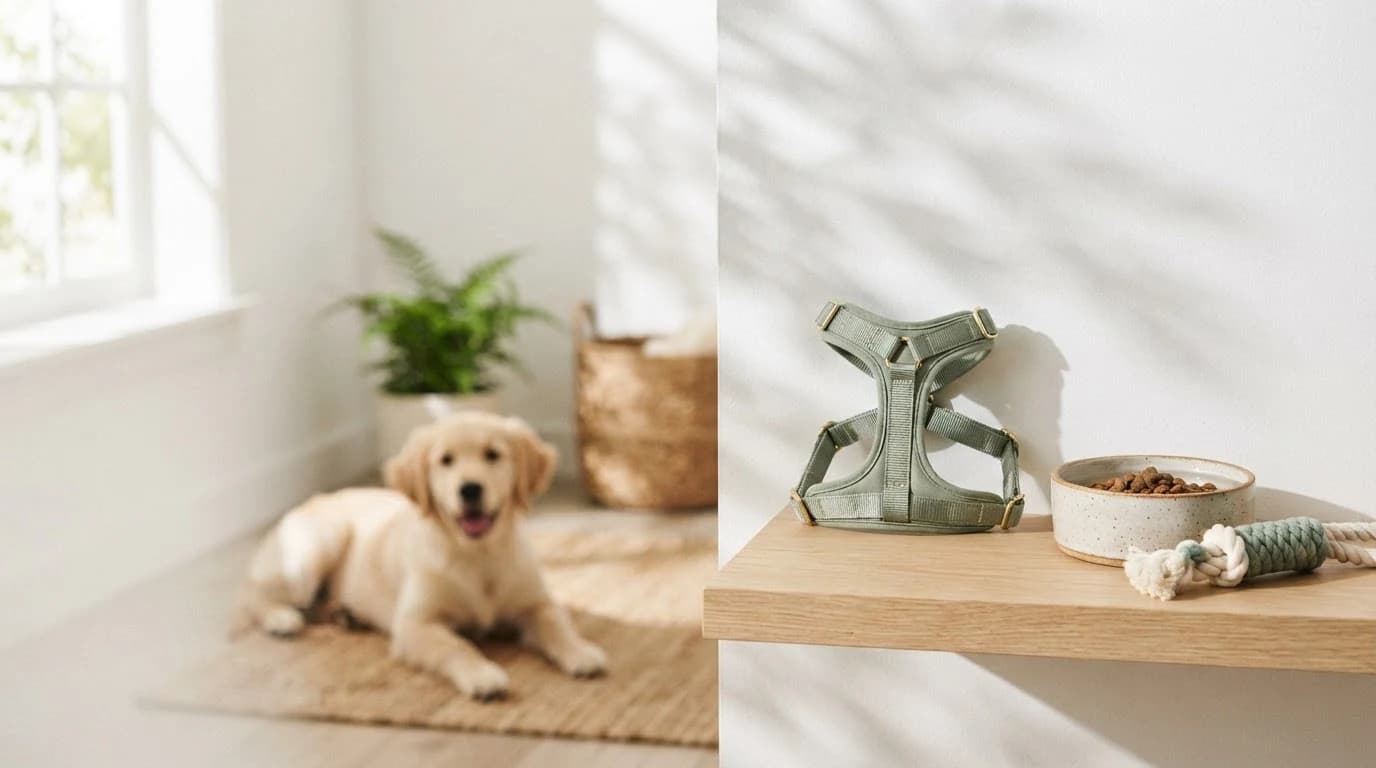
A pet product has to fit a body, survive a mouth, and be safe in a home. Buyers need to know the size against a real animal, how the harness or bed is measured, what the material feels like, how it handles chewing, scratching, washing and odour, which pieces are included, and whether small parts or treats create a risk. A cute pet in a styled scene creates desire, but it can hide a bad fit. Build the set around measurement, material, safety and contents, then use one honest lifestyle image to show the product on a representative animal.
Fit is breed-specific, not one-dog
A harness that fits a whippet will not fit a bulldog, and a bed photographed with a small terrier can look enormous to the buyer of a large breed. Show the product on more than one breed or body shape when the range serves them, and state the chest, neck, length or weight range that each size covers. Put a measuring tape or a familiar object in at least one frame, and photograph the adjustment points: straps, buckles, handles and closures. For apparel, show the garment on a standing animal and a sitting animal so the buyer can see how it moves. Do not use a single photogenic dog to represent every size in the range.
Material, hardware and chew honesty
Pet products are destroyed in ways a studio cannot simulate. Show the actual material at a scale where weave, pile, rubber thickness, stitching and hardware are visible. For toys, state the chew level and the intended use rather than implying indestructibility; no fabric or plastic is fully chew-proof. For beds and blankets, show the base, zip, removable cover and seam construction. For collars and harnesses, show the buckle, D-ring and adjustment hardware under light so the buyer can judge the metal and plastic. Do not retouch away fraying, thin seams or loose threads in a product that is meant to survive daily use.
Washing, odour and household safety
Pet products get dirty, wet and chewed, so care information belongs in the image set. Show the care label, removable covers, machine-wash limits and drying guidance where they exist. If the product is marketed as odour-resistant, easy-clean or waterproof, make sure the claim is substantiated and the image does not imply a level of performance the material cannot deliver. Show small parts, squeakers, batteries and treat pieces clearly, and state supervision or age guidance where relevant. For treats and food, show the actual portion and label rather than a bowl that makes a small bag look generous.
Contents, sizing and packaging
A pet bundle is judged by what arrives and whether it fits the animal the buyer actually owns. Lay out every piece, count them, and show the sizes side by side when a listing covers a range. For consumables, show the net weight, piece count and packaging dimensions, and keep the photographed portion consistent with the label. Do not use a large dog bed as the backdrop for a small bed without labelling the size difference. If the product is for cats, small pets or senior animals, show the relevant access point, step height or opening rather than only a generic lifestyle scene.
A repeatable pet product image set
Standardise six frames per SKU: a clean hero, a scale or measurement frame, an on-pet fit frame, a material and hardware detail, a contents or packaging frame, and a care or safety frame. Keep the same light and background across a range so sizes can be compared, and photograph each size on a representative animal rather than resizing one image. Store the measurements and approved fit references with the SKU so a new colour or size does not restart art direction. Review the set on a phone; if the harness fit or the included pieces disappear at thumbnail size, the listing will produce avoidable returns and support questions.
FAQ
How do I show pet product size accurately?
State the chest, neck, length or weight range for each size, show the product on more than one breed or body shape, and include a tape measure or familiar object in at least one frame.
Can a pet toy be described as indestructible?
No material is fully chew-proof. State the chew level and intended use, show the material and seams honestly, and recommend supervision where appropriate.
What should a pet listing show about washing?
Show the care label, removable covers, machine-wash limits and drying guidance. Only claim odour-resistant or waterproof performance when it is substantiated for the product.
Should the image show every included piece?
Yes. Lay out all pieces, count them, show sizes side by side and state net weight or piece count for consumables. Label any size difference between photographed products.
Can AI generate pet product images?
It can generate supporting scenes and on-pet directions, but fit, material safety, chew claims, washing limits and included contents must be checked against the real product before publishing.
Official sources
- Amazon Seller Central — product image requirementsChecked 2026-11-13
- Shopify Help — product mediaChecked 2026-11-13
- Google Search Central — image best practicesChecked 2026-11-13
Checked before publishing. Confirm the current requirements on the destination platform before a batch upload.
Related resources
Cleaning Product Image Guide (2026)
How to photograph cleaning products so dilution, bottle size, surface compatibility, safety warnings and claims are accurate across compliant listings.
Baby and Kids Product Image Guide (2026)
How to photograph baby and children's products so age grading, safety features, materials and sizing are accurate across storefront and marketplace images.
Footwear Product Image Guide (2026)
How to photograph shoes so fit, sizing, sole construction, materials and return-reducing details are clear across marketplace and storefront images.
Headphone and Audio Product Image Guide (2026)
How to photograph headphones and audio gear so fit, materials, controls, battery and codec claims are accurate across storefront and marketplace images.
Resource center
A central entry point for guides, examples, templates, industry pages, and channel hubs.
E-commerce video
Alongside product-image workflows, AISellerKit supports e-commerce video generation from a product start image and a short creative direction. It helps teams explore product motion for PDP heroes, short-form ads, and social previews, while keeping task history in the same account workspace. Teams must review every result for product accuracy and channel compliance before publishing.
Industry pages
Explore category-specific workflows for beauty, electronics, home, pet, and more.
Examples
Inspect public examples for detail pages, hero visuals, and marketplace sets.
Templates
Use reusable prompt and workflow templates for production tasks.