
Coffee and Tea Product Image Guide (2026)
Coffee and tea buyers judge origin, roast, grind and freshness before scent. This guide covers label accuracy, bean and leaf texture, brew context, packaging weight and the claims a specialty listing must support.
AISellerKit Editorial Team · Reviewed by Commerce Strategy Team · Updated Jul 3, 2026
Production and review workflow
What coffee and tea buyers need to judge
A coffee or tea listing is a set of sensory promises: origin, varietal, process, roast level, grind, harvest or production date and brew method. Buyers also need the net weight and whether the package is whole bean, ground or in bags. A beautiful cup cannot prove freshness. Build the set around label legibility, raw material texture, brew context and packaging data, then use one cup image that shows the actual color and clarity of the brewed product.
Label, origin and process accuracy
Keep the front label, origin, varietal, process, roast date and net weight legible at phone size. Do not use a generic origin photo for a single-origin product, and do not imply a farm or certification the supplier cannot document. For tea, show the garden, region, harvest and leaf grade where available. For decaf, state the decaffeination method. If the product is organic or fair-trade, show the certification mark and keep the image copy consistent with the certificate.
Bean, leaf and texture detail
Coffee buyers look for even roast color, bean shape and surface oil; tea buyers look for leaf shape, tip, color and grade. Show a macro of the raw material on a neutral surface and a second image at a realistic scale next to a spoon or brew basket. Do not over-saturate greens or browns. For matcha and fine tea, show the powder or leaf texture without smoothing it into a flat color. For flavored coffee, show the inclusion honestly rather than implying whole beans are coated in visible pieces.
Brew context and extraction
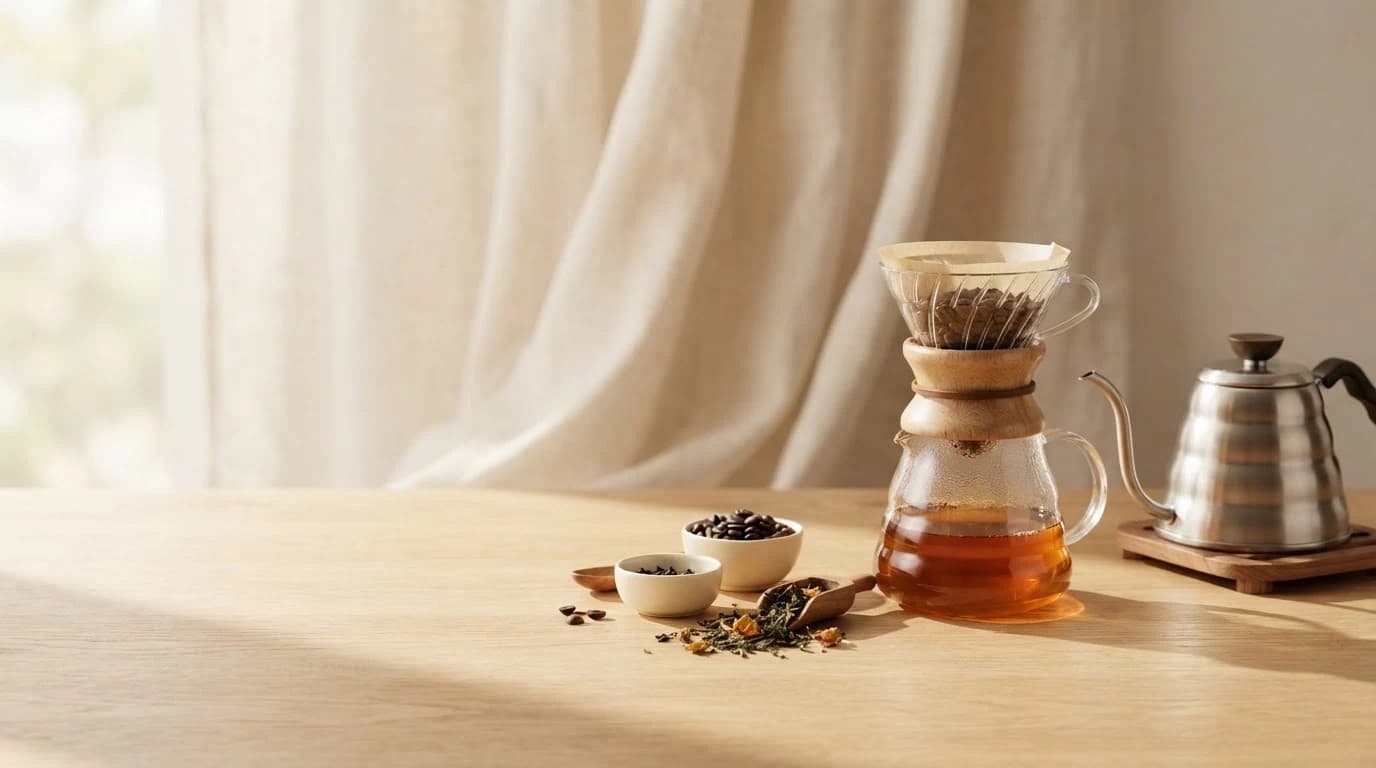
Show the product brewed in the method named on the package: pour-over, espresso, French press, cold brew or tea pot. State the dose, water temperature and ratio if the listing claims a recipe. Show the brewed color and clarity rather than a generic dark cup, and avoid milk or foam unless the product is intended for it. For tea, show the liquor color and leaf expansion. A brew image is a promise about strength and flavor, so keep it consistent with the roast or leaf grade.
Freshness, packaging and storage claims
Roast date, harvest date, best-before date, valve type and storage guidance are purchase drivers. State whether the bag has a one-way valve, whether it is resealable and whether whole bean or ground coffee is recommended for the buyer's equipment. Do not claim freshness beyond the packaging data. For tea, state the harvest season and storage conditions. Show the actual package weight and dimensions so the buyer understands the value.
A repeatable coffee and tea image set
Standardise six frames per SKU: a clean pack hero, a label or origin frame, a raw material macro, a brew or liquor frame, a package weight or contents frame and a storage or certification frame. Keep the same light and background across a range so roast and leaf colors can be compared, and photograph every size with a scale reference. Store the roast or harvest data with the SKU so a new lot does not reuse an old image.
FAQ
How do I show coffee freshness in images?
Show the roast date, valve type and packaging format, and keep the brew image consistent with the stated roast. Do not claim freshness beyond the package data.
What origin information should a coffee or tea listing show?
Show origin, varietal or garden, process, roast or harvest date and net weight. Use certification marks only when documented.
How do I photograph coffee beans and tea leaves accurately?
Use neutral light, a macro on a neutral surface, a realistic scale reference and no over-saturation. Show roast evenness, leaf grade or matcha texture honestly.
Should the listing show a brewed cup?
Yes, brewed in the method named on the package, with the stated dose and ratio where relevant. Show the real liquor color and clarity rather than a generic dark cup.
Can AI generate coffee and tea images?
It can generate supporting brew scenes and texture directions, but origin, process, roast date, weight and certification claims must be verified against the physical package before publishing.
Official sources
- Amazon Seller Central — product image requirementsChecked 2026-11-13
- Shopify Help — product mediaChecked 2026-11-13
- Google Search Central — image best practicesChecked 2026-11-13
Checked before publishing. Confirm the current requirements on the destination platform before a batch upload.
Related resources
Baby and Kids Product Image Guide (2026)
How to photograph baby and children's products so age grading, safety features, materials and sizing are accurate across storefront and marketplace images.
Bag and Luggage Product Image Guide (2026)
How to photograph bags and luggage so capacity, dimensions, hardware, materials and carry-on compliance are clear across storefront and marketplace images.
Cleaning Product Image Guide (2026)
How to photograph cleaning products so dilution, bottle size, surface compatibility, safety warnings and claims are accurate across compliant listings.
Collectible and Art Product Image Guide (2026)
How to photograph collectibles and art so condition, edition, scale, provenance and authenticity claims are accurate across marketplace and storefront images.
Resource center
A central entry point for guides, examples, templates, industry pages, and channel hubs.
E-commerce video
Alongside product-image workflows, AISellerKit supports e-commerce video generation from a product start image and a short creative direction. It helps teams explore product motion for PDP heroes, short-form ads, and social previews, while keeping task history in the same account workspace. Teams must review every result for product accuracy and channel compliance before publishing.
Industry pages
Explore category-specific workflows for beauty, electronics, home, pet, and more.
Examples
Inspect public examples for detail pages, hero visuals, and marketplace sets.
Templates
Use reusable prompt and workflow templates for production tasks.